Have you noticed families of turkeys roaming through your yard and your supermarket parking lot? Wild turkeys have become part of the landscape on Long Island and are now considered common.
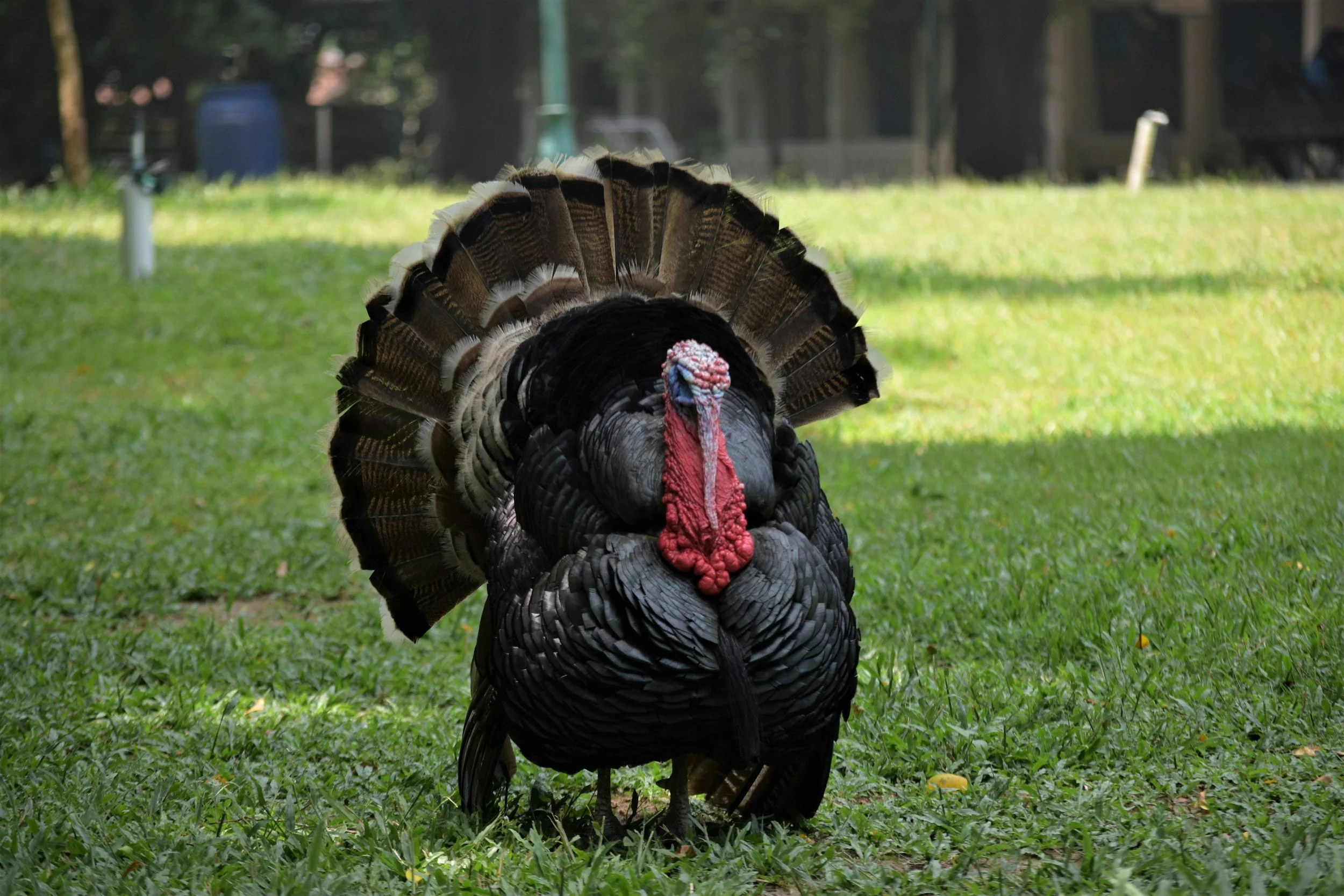
They were pretty much extinct by the 1800s. In the 1990s, the NYS Department of Environmental Conservation reintroduced less than 100 in upstate New York which has contributed to the current growth which, at this time, the DEC estimates to be over 6,000 on Long Island alone.
Wild turkeys can be seen in several habitats ranging from forests to open clearings and as we know, in residential areas. They are now part of the landscape. Some people feel that they are a nuisance while others are hopeful that they will help control the tick population. An adult turkey is one of the most voracious tick predators around and may eat 200 or more ticks in a day!
Currently, there is a two-year study being conducted by the DEC to monitor and count the turkey population in order to determine management strategies. This study involves trapping, tagging and releasing. Based on the study results, a spring hunting season, similar to those in other parts of the state, has been introduced to manage the population. Suffolk County typically opens in May and is open to licensed hunters with a turkey permit. Hunting is restricted to shotguns or archery equipment, and rifles are prohibited. Specific hunting areas may require reservations.
The National Wild Turkey Federation was founded approximately 50 years ago to conserve the bird they love and take care of people who love them, while conserving the habitat both need to thrive. Since its inception in 1973, the NWTF has provided the foundation for wild turkey conservation throughout North America. From the first research project funded in the 1970s, to the multimillion-acre restoration initiatives going on today and everywhere in between, conserving the wild turkey will be the backbone of the National Wild Turkey Federation.
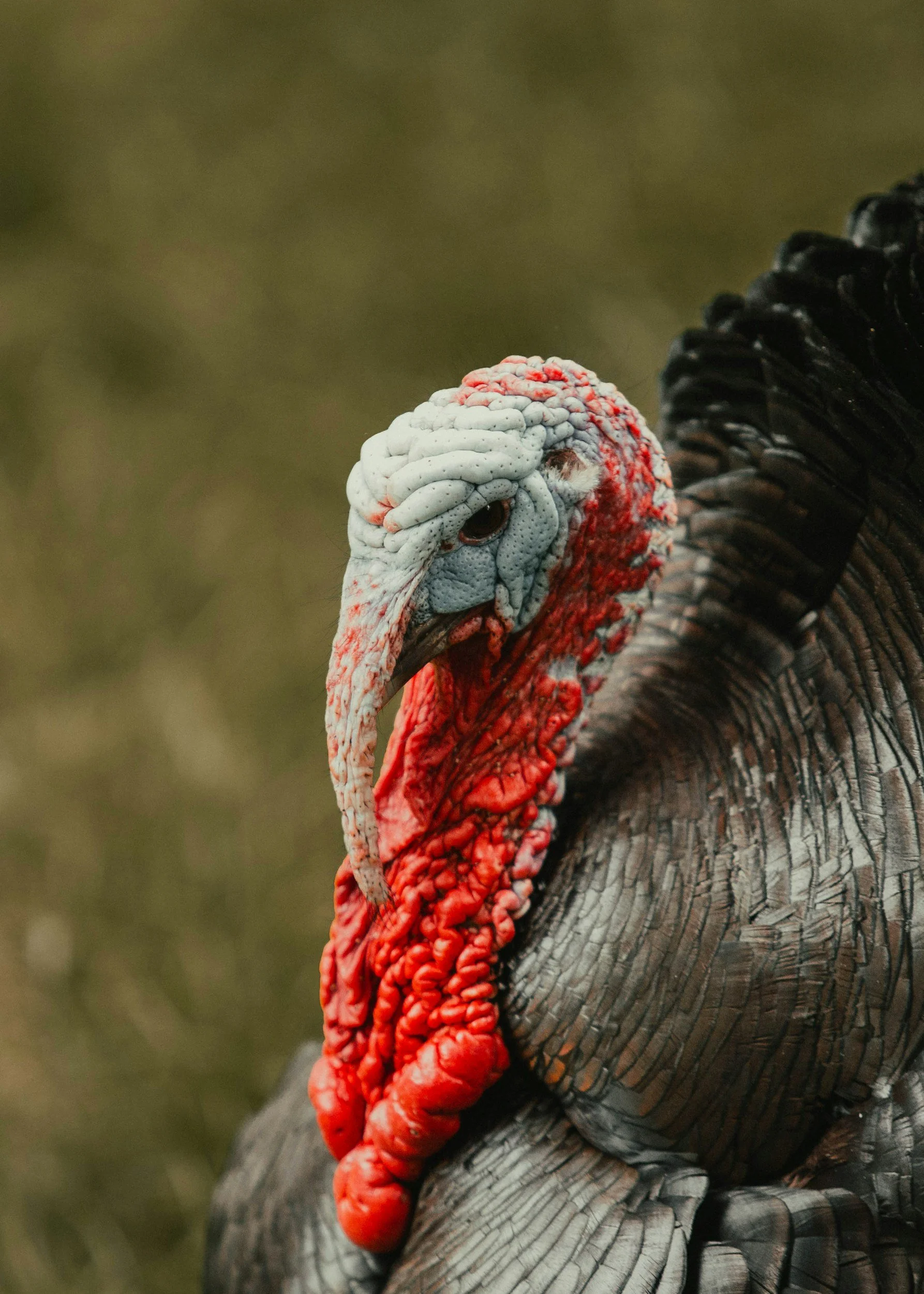
At Sweetbriar we often get calls telling us that a turkey was seen trying to get into the local gym or a store at a strip mall. They aren’t actually attempting to enter but have seen their reflection in the glass doors and think it is a rival turkey…an intruder! They react to their reflection often exhibiting aggressive behavior due to their territorial nature. In these cases, they do not leave the area until the reflection goes away. They have been known to peck at cars, windows and mirrors which has caused problems. Turkeys focused on their reflection near streets have even blocked traffic and followed cars. This behavior is due in part to their keen eyesight and is quite common.
What turkey behavior should concern you? There is cause for concern if a turkey is aggressive, injured or displaying signs of severe illness like lethargy or abnormal droppings. A turkey that stares you down, approaches you or tries to intimidate you is exhibiting aggressive behavior. This can happen during the spring breeding season when males are establishing dominance, or if they have become accustomed to being fed by humans. In this case, you should not back down but do not attempt to run away. Try to gently scare them away. Avoid walking through the flock but go around them instead. If things get out of hand, call your local wildlife authorities.
If the turkey appears to be sick or injured, do not touch it. Call a local wildlife rehabber who will be able to assess the situation.
To help keep turkeys away from your property, remove any potential food sources like bird feeders or spilled seeds that could attract them.
Did You Know?
A frightened turkey can run up to 25 mph in short bursts. Running is their primary defense against ground predators, which is made possible by their strong legs, excellent eyesight and hearing. When they take flight, they can reach even faster speeds of 50-55 mph in short flights.
Wild turkeys are very intelligent and have adapted to their environment in order to survive. They are social creatures who learn from experience, have complex vocalizations to recognize each other, and can remember people and navigate large areas. They can even learn to recognize their own name!
They are able to remember the geographic layout of over 1,000 acres, which aids in finding food. They also have good memories, allowing them to recognize individuals after months apart.
They are curious and enjoy exploring, playing games and solving puzzles and have been seen utilizing tools.
No need to worry about a lone turkey. He is either searching for a mate or foraging for food. Please do not feed them; water is ok.
Anne Marie Tognella, Sweetbriar Volunteer